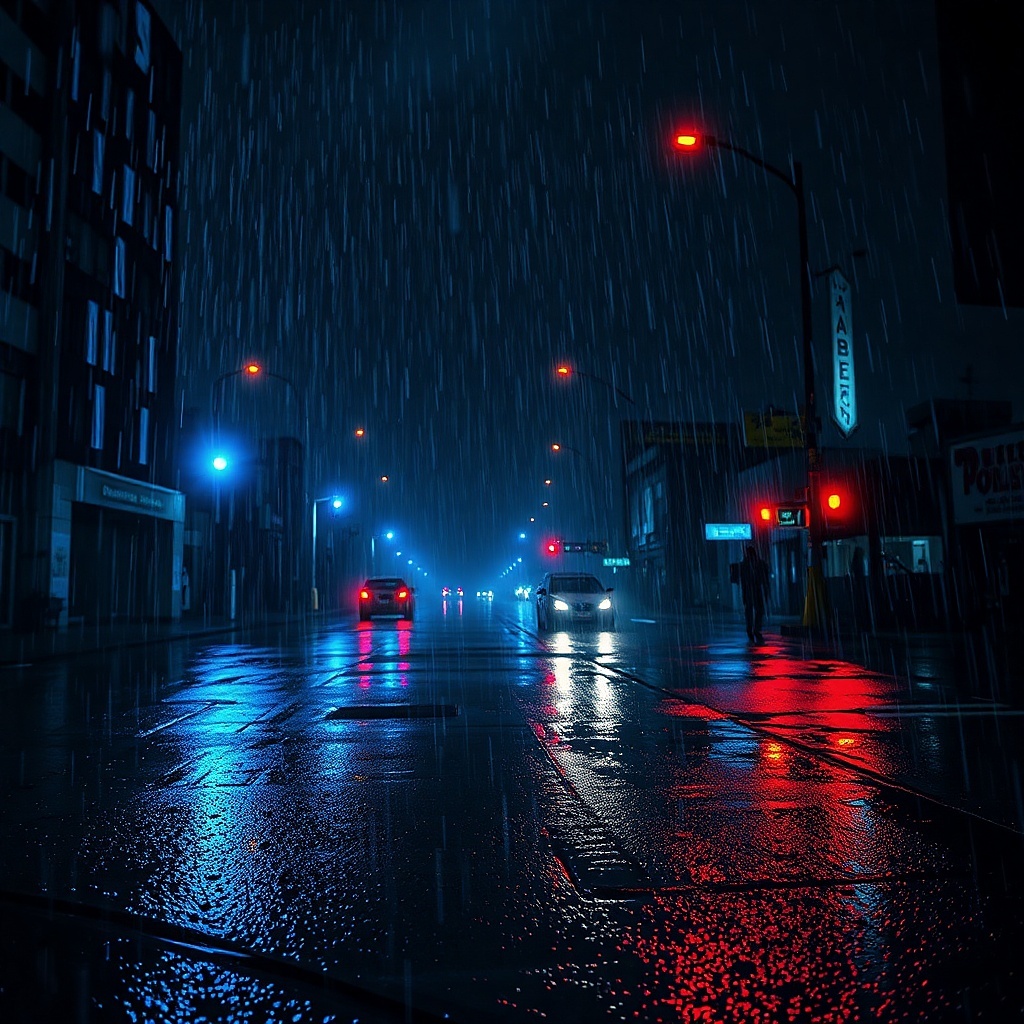
The Plague Dr Universe began as a single recording made on a fire escape at three in the morning: rain on a metal railing, a siren four blocks out, and nothing else. That two minutes of tape became the opening of the first record — and the first panel of the first chapter was drawn to match it, frame for frame.
Everything since has been built the same way. The story is not illustrated after the fact and the music is not scored to finished pages. They are made in the same room, in the same week, arguing with each other until both are right.
The setting
A Pacific Northwest city that is permanently two days after something bad. Emergency light on wet brick. Storefronts that reopened too quickly. Bus shelters where people still stand a little further apart than they used to. It is recognisably Seattle — First Avenue, the Needle, the waterfront, the drawbridges — rendered in the register of a place that keeps its receipts.
The city is not a backdrop. In the books it behaves like a character with a grudge: streets that repeat, reflections that arrive a half-second late, a wheel on the waterfront that keeps turning long after the last rider got off.
The Doctor
Waxed leather, brass buckles, a beak stitched from a single piece of hide, and a cane he does not appear to need. Nobody in the story agrees on what he is. The official position is that he is a man in a costume. The working position, held by everyone who has actually met him, is that he arrives shortly before the worst part and stays until it is over.
He is not the plague. He is what the plague sends when it wants a second opinion.
He does not speak in the first three chapters. When he finally does, in Chapter Four, it is one sentence, and readers have been arguing about it since.